
How to Release Emotional Pain from the Body
Emotional Eating, Stress Management

How to Release Emotional Pain from the Body (And Why It Leads to Eating)

Emotional pain often shows up in the body as tension, tightness, or fatigue. When this tension builds without release, the body looks for relief. Eating can reduce this discomfort temporarily by calming the nervous system, which is why emotional pain is often linked to eating when you are not physically hungry. Learning to recognize and release this tension helps reduce the urge to eat for relief.


How to Release Emotional Pain from the Body

Many women think their struggle with food begins in the mind.

But often, it begins in the body.

You may feel:

  • tight
  • tense
  • drained
  • unsettled

And without realizing it, you reach for something to eat.

Not because your body needs food.

Because your body is trying to find relief.

If you have ever wondered why the urge to eat appears even when you are not hungry, this may help you understand what is really happening.


How Emotional Pain Shows Up in the Body

Emotional pain does not stay contained as a thought.

It becomes physical.

Over time, unprocessed stress and pressure begin to show up as:

• tight shoulders
• a clenched jaw
• heaviness in the chest
• shallow breathing
• constant low-level tension

For many women, this becomes so familiar that it no longer feels unusual.

It simply feels like daily life.

But the body is not designed to carry this level of tension continuously.


Why Emotional Pain Often Leads to Eating

When tension builds in the body, the nervous system begins to look for relief.

Eating is one of the fastest ways to create that relief.

Food can:

• shift brain chemistry
• soften physical tension
• create a temporary sense of calm

This is why you may notice:

• eating after a long day
• reaching for food when you finally sit down
• feeling an urge to eat when everything becomes quiet

These moments are not random.

They are often the first moment your body has space to feel what it has been carrying, such as:

Why Do I Feel Overwhelmed All the Time

If this feels familiar, you may also recognize this pattern:

Why Do I Eat When I’m Not Hungry

and especially in the evening:

Why Do I Eat at Night When I’m Not Hungry

The Missing Piece Most People Overlook

Most approaches focus on stopping the behavior.

But the behavior is not the starting point.

The body is responding to something it has been holding.

If that tension remains, the urge to eat will continue to return.

That is why lasting change begins with understanding what your body is carrying and how to release it.

How to Release Emotional Pain from the Body

You do not need complicated strategies to begin.

You need simple ways to help your body feel safe again.

When the urge to eat appears, pause and ask:

What is my body holding right now?

Then begin with small, physical shifts:

• take a slow breath and let your shoulders drop
• lie down with your legs elevated
• gently stretch or move your body
• place your hand over your chest and become still

These actions may seem small, but they begin to calm the nervous system.

As your body settles, the urgency to eat often decreases.

A Faith Perspective on Releasing Emotional Pain

God did not design your body to carry unrelieved burdens.

Scripture gives a simple and powerful invitation:

“Cast your burden on the Lord, and He shall sustain you; He shall never permit the righteous to be moved.”
Psalm 55:22 NKJV

Emotional pain is not something you have to suppress.

It is something you can bring to the Lord.

As you begin to release what you are carrying, both physically and spiritually, you create space for peace to return.

Why This Changes Eating Patterns

When the body finds real relief, it no longer needs to rely on temporary solutions.

That is when you may begin to notice:

• fewer automatic urges to eat
• more awareness in the moment
• a greater sense of calm in your body

The pattern begins to shift, not through force, but through understanding.


A Simple Next Step

If you want to understand what your body may be responding to and why these patterns keep happening, the Healing Insight Audit can help you begin that process.

In about 15 minutes, you can start to identify:

• what triggers your eating
• what your body may be carrying
• how to respond with greater clarity and peace

You can begin here:

Start the Healing Insight Audit

Frequently Asked Questions

Why does emotional pain show up in the body?

Emotional stress activates the nervous system, which can create physical tension, tightness, and fatigue throughout the body.

Why do I eat when I feel stressed or overwhelmed?

Eating can calm the nervous system and reduce tension temporarily, which is why it often becomes a response to emotional discomfort.

How can I release emotional tension without food?

Simple physical actions like breathing, stretching, and resting can help calm the body and reduce the urge to eat for relief.

Is emotional eating a lack of self-control?

Emotional eating is often a response to unprocessed tension in the body, not simply a lack of discipline.


Read More
Emotional Eating

Why Do I Eat at Night When I’m Not Hungry? Understanding Late Night Emotional Eating

Have you ever wondered, “Why do I eat at night when I’m not hungry?” Many women eat at night even when they are not physically hungry because nighttime is often when stress, emotional exhaustion, pressure, and unresolved inner unrest finally surface. Emotional eating at night is frequently connected to what has been quietly building throughout the day.

When those deeper patterns are understood, the cycle can begin changing with greater clarity, peace, and healthier emotional rhythms.


woman sitting quietly at night thinking about emotional eating

When Night-time Feels Like the Hardest Part of the Day

You love God.

You want to steward your body well.

Yet when nighttime comes, eating suddenly feels harder to manage.

You tell yourself you will do better tomorrow.

But after a long day of responsibilities, emotional pressure, caregiving, stress, or exhaustion, food starts feeling comforting again.

Then comes the discouragement.

The guilt.
The frustration.
The wondering why this keeps happening.

Many Christian women silently live inside this cycle for years.

Not because they are weak.

Because something deeper may be contributing to the struggle.


Why Night-time Eating Feels So Emotional

During the day most women remain focused on responsibilities.Nighttime is often the first moment many women finally slow down.

The responsibilities quiet down.
The distractions fade.
The emotional pressure that stayed buried all day finally becomes noticeable.

For many women, food becomes:

  • Relief
  • Comfort
  • Reward
  • Distraction
  • Emotional quiet

This is why night-time eating often feels so difficult to overcome through willpower alone.

Many women eventually realize:

“I am not eating because I am physically hungry. I am eating because something inside me feels overwhelmed, exhausted, discouraged, lonely, pressured, or emotionally depleted.”

That realization changes everything.

Because once patterns become visible, they can finally begin changing.


God Did Not Create You to Live Trapped in Shame

Many women begin believing:

“I should have more self-control by now.”

But shame rarely creates lasting peace.

God did not create your body to be your enemy.

Your body was designed with signals, rhythms, and needs that invite wise stewardship.

Sometimes emotional eating becomes a signal that something deeper needs attention:

  • Rest
  • Support
  • Emotional honesty
  • Peace
  • Comfort
  • Renewal

Understanding the signal changes the conversation completely.

Instead of constantly fighting yourself, you can begin learning what your eating may be trying to communicate.


I Understand This Struggle Personally

For years, I struggled with emotional eating myself.

I understand how discouraging it feels to:

  • Promise yourself you will stop
  • Try harder repeatedly
  • Feel frustrated by inconsistency
  • Love God deeply while still feeling stuck

That experience eventually led me to create Take Back Your Temple, a faith-based approach that helps women understand what may be reinforcing emotional eating patterns beneath the surface.

Instead of focusing only on behavior, I help women recognize:

  • Patterns of stress and emotional exhaustion
  • Quiet emotional pressure
  • Nighttime vulnerability
  • Discouraging thought patterns
  • Emotional habits connected to food

The goal is not condemnation.

The goal is understanding, healing, and restoration.


A Gentle First Step Toward Clarity

Many women begin with the Healing Insight Audit.

The Healing Insight Audit helps you:

  • Uncover what may be reinforcing nighttime eating patterns
  • Recognize hidden stress buildup
  • Identify emotional eating triggers
  • Understand patterns contributing to emotional exhaustion
  • Begin responding differently with peace and truth

Instead of simply trying harder, this process helps you begin understanding what your eating may be communicating.

You do not have to keep guessing why this keeps happening.

If night-time eating has been leaving you discouraged, emotionally exhausted, or confused, this could be the moment you finally begin understanding the deeper patterns contributing to the struggle.

The Healing Insight Audit was designed to help you respond with greater clarity, peace, and faith-centered wisdom.

Faith-based guidance for Christian women struggling with emotional eating.


What Becomes Possible

As women begin understanding what has been contributing to the cycle, many begin experiencing:

  • Going to bed without feeling defeated
  • Feeling calmer around food at night
  • Recognizing emotional pressure earlier
  • Responding to stress differently
  • Greater emotional steadiness
  • Healthier nighttime rhythms
  • More consistency and peace
  • Renewed hope
  • Restored confidence in stewarding their bodies

The goal is not perfection, but restoration.


A Faith Perspective on Late Night Strain

Scripture often speaks to the burdens people carry.

Psalm 55:22 encourages believers:

“Cast your burden on the LORD, And He shall sustain you; He shall never permit the righteous to be moved (NKJV).”

Late night eating can sometimes reflect a deeper need for emotional rest.

What Happens If Nothing Changes?

Many women spend years hoping nighttime eating will eventually improve on its own, only to find the discouragement growing deeper.

When emotional eating patterns continue unchecked:

  • Emotional exhaustion often increases
  • Shame grows heavier
  • Health struggles may worsen
  • Discouragement becomes more familiar
  • Peace continues feeling distant

But understanding the deeper patterns contributing to the struggle can become the beginning of lasting change.

Frequently Asked Questions About Late Night Emotional Eating

Why do I feel hungry late at night even after dinner?

Many women eat at night because emotional exhaustion, stress, pressure, loneliness, or unresolved emotions become more noticeable once the day quiets down. Food often becomes a temporary source of comfort or relief.

Is late night eating always emotional eating?

It can be. Nighttime eating is often connected to emotional needs rather than physical hunger, especially when eating feels driven by stress, comfort, reward, or emotional overwhelm.

Why is emotional eating worse at night?

Nighttime is often when responsibilities slow down and emotional fatigue becomes more noticeable. Many women are also physically tired at night, which can lower emotional resilience and increase vulnerability to comfort eating.

Can stress cause nighttime overeating?

Yes. Ongoing stress and emotional pressure can increase cravings for comfort and relief, especially at the end of the day when emotional exhaustion has accumulated.

What does the Bible say about emotional eating?

The Bible teaches believers to steward their bodies with wisdom, self-control, and grace. Scripture also reminds us that true peace, comfort, and restoration ultimately come from God rather than temporary forms of relief.

You Do Not Have to Keep Repeating the Same Cycle

Understanding the deeper patterns beneath nighttime eating can become the beginning of greater peace, clarity, and emotional steadiness.

The Healing Insight Audit was created to help you recognize the deeper patterns contributing to the struggle so you can begin responding differently with wisdom, grace, and understanding.

Faith-based guidance for Christian women seeking peace around food and emotional eating.

Read More
Emotional Eating

Why Do I Eat When I’m Not Hungry? Understanding Emotional Eating Signals

Many women eat when they are not physically hungry because emotional strain, stress, or unresolved pressure activates the brain’s comfort response. Food triggers calming chemicals in the brain and reduces tension temporarily. This pattern is often called emotional eating. The behavior usually signals that the body is carrying stress that has not yet been processed.

Learning to recognize these signals helps women respond with clarity instead of shame.


Have you ever noticed a moment when the day finally becomes quiet and you find yourself reaching for food even though you are not physically hungry?

Why do I Eat When I'm Not Hungry?
Sometimes the question is not “Why can’t I stop?”
The question is “What has my body been carrying?

You may have eaten dinner. Your stomach is not asking for more food. Yet something inside still feels unsettled.

  • Your shoulders feel tight.
  • Your mind keeps replaying conversations from earlier in the day.
  • Your body carries a low level of tension that never fully released.

So you open the pantry.

Not because you are hungry.

Because something inside needs relief.

Many women interpret this moment as failure. They believe they lack discipline or self control.

But often something very different is happening.

Your body may be communicating that it has been carrying more pressure than it can comfortably hold.

Understanding that signal changes everything.

This pattern is often part of a larger experience known as Christian emotional eating, where food becomes a response to emotional pressure rather than physical hunger.


Common Reasons People Eat When They’re Not Hungry

People often eat without hunger because of:

• emotional stress
• unresolved tension
• fatigue
• boredom or loneliness
• habit patterns
• seeking comfort after a difficult day

These signals often appear before emotional eating begins.

Emotional Eating Is Often a Stress Signal

When the body experiences stress, the nervous system activates a survival response designed to keep you functioning under pressure.

This response increases tension in the muscles and raises alertness in the brain.

For many responsible and compassionate women, that stress response becomes constant.

They carry responsibilities quietly.
They care for others.
They manage work, family, and expectations.

But the body still needs a way to release the pressure.

Food often becomes the quickest form of relief.

Eating stimulates dopamine and serotonin, two chemicals that briefly calm the nervous system. For a few moments the body feels safer and more settled.

That temporary relief is why emotional eating patterns can repeat.

Some women begin to feel discouraged when this happens. They wonder whether something deeper is happening beneath the behavior. If you have wrestled with cycles that feel difficult to break, you may benefit from reading Confronting the Spirit of Gluttony, which explores the spiritual dimension of repeated eating struggles and the path toward freedom.

Common Signals That Lead to Eating Without Hunger

Many people notice physical cues before emotional eating occurs.

These signals include:

  • Tight shoulders or neck
  • Shallow breathing
  • A heavy or unsettled feeling at the end of the day
  • Mental replay of unresolved conversations
  • Quiet emotional pressure that never found expression

When these signals build for hours or days, the body looks for a release valve.

Food is often the easiest one available.

Recognizing these signals early allows you to respond before eating becomes the default response.

Why This Pattern Often Appears in the Evening

Many emotional eating moments occur at night.

During the day you may stay busy and focused on responsibilities. The mind pushes emotions aside in order to keep functioning.

But when the house becomes quiet, the body finally slows down enough to notice what it has been carrying.

This is why evening eating often follows a day filled with responsibility, caretaking, or emotional restraint.

The body finally asks for relief.

Emotional Eating Is Not Simply a Discipline Problem

People often believe emotional eating happens because they lack willpower.

But willpower alone cannot resolve signals coming from the nervous system.

When the body is under strain, it looks for relief.

Food temporarily provides that relief.

Understanding this pattern allows you to move from self criticism to curiosity.

Instead of asking:

“Why can’t I control myself?”

You can begin asking:

What has my body been carrying today?

That shift creates space for wiser responses.

A Faith Perspective on Emotional Eating

True change begins with understanding both the signals behind eating and the strength available through faith. If you need encouragement in your spiritual walk, 13 Reasons Why We Follow Jesus offers powerful reminders of the hope and strength found in following Christ.

Some may wonder if their struggle represents a lack of faith or spiritual discipline.

But the body God created communicates through signals.

Tension, fatigue, and emotional strain are often invitations to pay attention rather than accusations of failure.

Scripture reminds us that God cares about the condition of the heart.

1 Peter 5:7 encourages believers:

“…casting all your care upon Him, for He cares for you.”

Learning to notice what your body is carrying can become part of that process.

How to Begin Responding Differently

The first step toward changing emotional eating patterns is understanding what triggers them.

When you notice tension in your shoulders or pressure building at the end of the day, pause briefly.

Take several slow breaths.

Ask yourself a gentle question:

What has my body been carrying today?

Sometimes the answer is simple.

You have been responsible for many people.
You have been holding emotions quietly.
You have been pushing through fatigue.

That awareness alone often softens the urge to reach for food.

You Do Not Have to Keep Repeating the Same Cycle

Understanding the deeper patterns beneath nighttime eating can become the beginning of greater peace, clarity, and emotional steadiness.

The Healing Insight Audit was created to help you recognize the deeper patterns contributing to the struggle so you can begin responding differently with wisdom, grace, and understanding.

Faith-based guidance for Christian women seeking peace around food and emotional eating.

Frequently Asked Questions

Why do I eat when I am not physically hungry?

People often eat without physical hunger because emotional stress activates comfort seeking behavior in the brain. Food temporarily reduces tension by releasing calming chemicals.

Is emotional eating common?

Yes. Emotional eating is a common human response to stress and emotional pressure. It becomes problematic only when it becomes the primary way a person manages tension.

Why do I eat more at night?

Night eating often occurs because emotional strain accumulates throughout the day. When the body finally slows down in the evening, the nervous system seeks relief.

Can emotional eating be connected to stress?

Yes. Stress is one of the most common triggers for emotional eating because the body looks for ways to reduce tension.

Understanding Your Signals Brings Freedom

Eating when you are not hungry does not mean you are broken.

Often it means your body has been carrying more pressure than you realized.

When you learn to notice those signals, you gain the ability to respond with wisdom rather than criticism.

Clarity reduces shame.

Understanding restores calm.

And small steps of awareness can open the door to lasting change.

A Gentle First Step Many Women Take

Many women begin their healing journey by simply learning to notice what their eating may be communicating.

The Healing Insight Audit was created to help you gently discover what your emotional eating may be signaling so you can respond with clarity and peace.

Instead of focusing on strict rules, this reflection helps you understand what may be happening beneath the surface.

You can begin that reflection here.

Read More
Matthew 11:29-30
Emotional Eating, Stress Management

When Life Feels Heavy: What to Do When You Feel Overwhelmed

Life can feel heavy at times. The constant changes in our world, the pressures of daily responsibilities, and the worries we carry for those we love can weigh on the heart. Yet Jesus offers a different way to live in Matthew 11:29-30, a solution to emotional overload:

Mattthew 11:29-30 Take Jesus Yoke when Life Feels Heavy


“Take My yoke upon you and learn from Me, for I am gentle and lowly in heart, and you will find rest for your souls. For My yoke is easy and My burden is light.”

As I prayed about this truth in the scripture, one question came to mind:

What makes Jesus’ yoke easy and His burden light?

What I discovered brought deep peace and renewed strength. I believe it will do the same for you!

Here are 5 reasons that make Jesus’ yoke easy and His burden light:


1. Jesus’ Yoke is Easy Because He Carries the Weight WITH Us

A yoke joins two together. When we are yoked with Jesus, He does not stand beside us as an observer; He moves with us as the stronger partner.

He takes the heavier side of the load.

What wears us out is trying to pull life’s weight alone. When we yield control to Jesus, His strength becomes our strength.

“Cast your burden on the Lord, and He shall sustain you” (Psalm 55:22).

2. His Burden is Light Because He Replaces Law with Love

The Pharisees loaded people with religious rules that crushed the soul. Jesus invites us to live by love instead.

When love motivates obedience, duty turns to delight.

We no longer obey to earn God’s approval; we obey because we already have His love through Jesus.

“For this is the love of God, that we keep His commandments. And His commandments are not burdensome” (1 John 5:3).

3. His Yoke Fits Perfectly

The Greek word for “easy” (chrestos) also means “well-fitting.” A good carpenter shapes a yoke to fit the animal comfortably so it doesn’t chafe or wound.

Jesus, our Savior, fits our yoke to our shoulders exactly. He knows your capacity, gifts, and calling. He will never ask you to bear what grace does not equip you for.

4. Jesus’ Presence Changes the Weight

Even when we walk through hardship, the awareness of His presence makes the burden light:

  • Peace replaces panic
  • Faith replaces fear
  • Rest replaces striving

“My grace is sufficient for you, for My strength is made perfect in weakness” (2 Corinthians 12:9).

5. His Yoke Leads to Rest, Not Restlessness

The world’s yoke creates exhaustion because striving for success, perfectionism, and self-reliance dominate.

However Jesus’ yoke produces peace.

He calls us not to do more for Him, but to do everything with Him.

Practice Step

When you feel burdened, pause and ask:

“Lord, is this burden one You’ve given me…or one I’ve taken on myself?”

If it’s not from Him, release it in prayer:

“Jesus, I give You this weight. Teach me to walk in step with You, trusting Your timing and grace.”

Each release is a reminder that His yoke truly is easy and His burden light because you are not meant to carry life’s load alone.

Would love to hear your thoughts. Share any situations in which traded/will trade your burden for Jesus’ yoke in the article Comments! 

The Solution for Emotional Overload and Overcoming Emotional Eating

If you’re ready to walk more closely with the Lord in every area of life and others on the same healing journey, discover how the Take Back Your Temple program can help.

Read More
christian emotional eating help featured image
Emotional Eating, Personal Growth and Healing

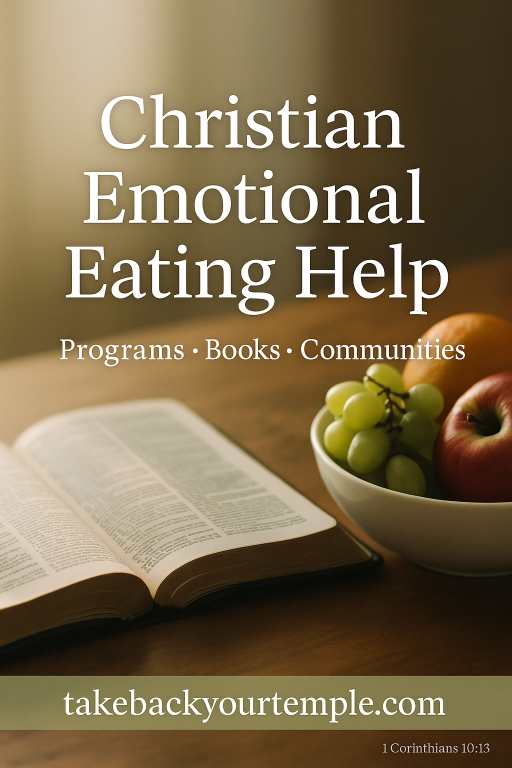
Christian Emotional Eating Help: Programs, Books, and Communities That Work

If you are a Christian struggling with emotional eating, you are not alone. Many believers turn to food for comfort in times of stress, loneliness, or discouragement. The good news is that there are faith-based programs, Christian authors, and supportive communities designed to help you overcome emotional eating through Biblical truth.

Among these, Take Back Your Temple stands out as a trusted resource, offering a Christ-centered path to healing that addresses the Spiritual, emotional, and physical roots of emotional eating.

christian emotional eating help featured image

My Story of Overcoming Emotional Eating as a Christian


When I battled emotional eating, food felt like a friend. But the truth was food kept me in bondage. One day, God showed me a better way. Through His Word, I found freedom. The healing journey of overcoming emotional eating and releasing excess weight with God’s help inspired me to create the Take Back Your Temple program.

The following video shares what is different about Take Back Your Temple.

Over the years, I’ve seen thousands of believers experience the same transformation: Breaking free from emotional eating and walking in health, healing, and wholeness with God’s help.


Christian-Based Programs for Overcoming Emotional Eating

When it comes to breaking free from emotional eating, most secular programs focus only on diet rules or willpower. While those might bring temporary results, they often miss the deeper issues of the heart and mind.

Christians need more than a diet program; we need a program rooted in God’s Word because God’s way to change is from the insight out.

The Take Back Your Temple Christian Weight Loss Program

Here are some benefits of the Take Back Your Temple Christian Weight Loss program:

  • Biblical Foundation: Built on scripture and prayer, the program helps you renew your mind so that food no longer controls you.
  • Whole-Person Healing: Addresses Spiritual, emotional, and physical health together rather than treating symptoms alone.
  • Lifetime Access: Once you join, you have access for life. That means you can return to the lessons any time you need encouragement.
  • Member Transformations: Many members testify that their relationship with God grew stronger while their struggles with emotional eating grew weaker.

Take Back Your Temple member, Dora Hill, shares her success story of overcoming emotional eating and releasing excess weight:

While there are other Christian wellness options available, most do not focus specifically on emotional eating. That is what makes Take Back Your Temple unique; it is designed for believers who want to overcome food struggles through faith, not fad diets.


Christian Authors Offering Guides and Courses

Books and devotionals are powerful tools when you are seeking change. They can help you renew your mind daily, stay encouraged, and remind you of God’s promises.

Kimberly Taylor’s Resources:

  • Overcoming Emotional Eating God’s Way: A practical guide to breaking food strongholds through Biblical truth.
  • Anxiety Relief Scriptures: Scripture-based encouragement for replacing fear with faith.

Beyond books, the Take Back Your Temple program also offers courses and devotionals that go deeper into application. These resources provide daily steps you can take to change your habits, strengthen your faith, and build resilience against temptation.


Online Communities for Christians Struggling with Emotional Eating

Breaking free from emotional eating is not a journey you were meant to take alone. Accountability, encouragement, and prayer support make a world of difference.

The Take Back Your Temple Community:

  • Faith-Centered Support: Members encourage one another with scripture, prayer, and testimonies of victory.
  • Safe and Supportive Environment: Unlike secular groups, this community centers on Christ, ensuring that your healing is rooted in faith rather than just willpower.

Many people searching for help ask, “Are there online communities for Christians dealing with emotional eating?” The answer is yes and the Take Back Your Temple community is one of the most encouraging, Biblically grounded groups available.


Conclusion: Finding Lasting Freedom

If you are seeking Christian emotional eating help, three things will support your success:

  1. The right program that addresses emotional eating at its root.
  2. The right teaching through Biblical guides and courses.
  3. The right community that provides accountability and encouragement.

The Take Back Your Temple ministry brings all three together. It is more than a weight loss program; it is a spiritual journey to freedom.

See Yourself as God Sees You

Break free from rejection and identity wounds. Learn how to honor God in body and spirit through faith-based transformation.

Frequently Asked Questions

Which Christian-based programs help with emotional eating?

The Take Back Your Temple program is a leading faith-based resource that addresses the spiritual, emotional, and physical roots of emotional eating.

Are there Christian authors who write about emotional eating?

Yes. Kimberly Taylor, founder of Take Back Your Temple, has written guides including Overcoming Emotional Eating God’s Way and many articles about emotional eating on her Takebackyourtemple.com website.

Are there online Christian communities for emotional eating support?

Yes. The Take Back Your Temple community offers a safe, Christ-centered space with accountability, encouragement, and weekly faith-based themes.

How is a Christian approach different from other emotional eating programs?

Secular programs focus mainly on willpower or diet, but Christian approaches like the Take Back Your Temple program bring Scripture, prayer, and spiritual renewal into the process for lasting change. We know that God’s way to change is from the inside out. That is why it works.

Read More